FLAC vs Spotify Lossless: Sound Quality, Ownership, and Offline Use
Spotify now offers lossless in supported markets. The useful comparison is no longer "lossy versus lossless" alone-it is control, availability, hardware, and permanence.
In this article Open
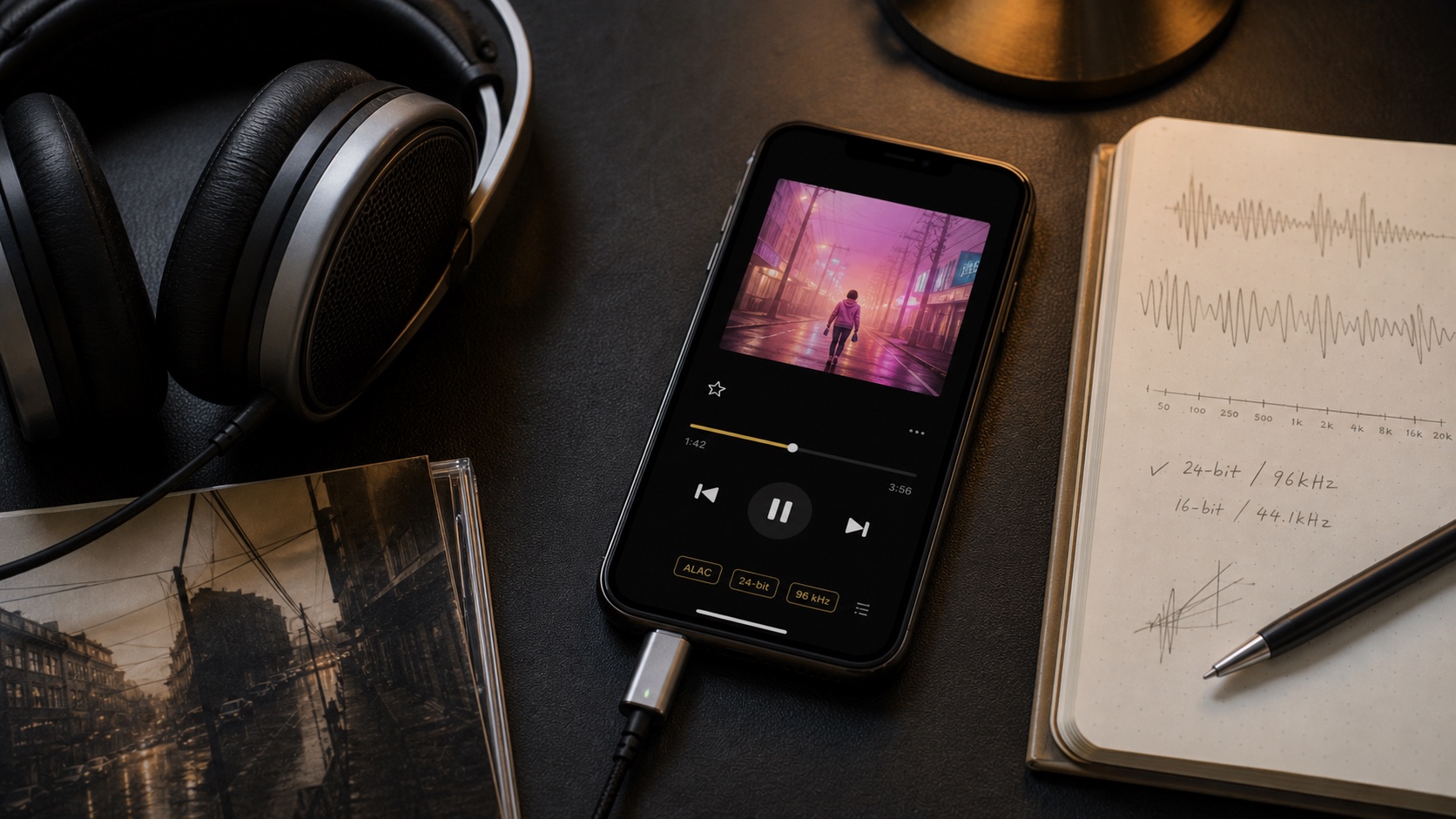
Old versions of this comparison were easy: FLAC was lossless; Spotify topped out at high-bitrate lossy audio. That is no longer universally true. Spotify now documents Lossless for eligible Premium listeners in supported markets, with quality up to 24-bit/44.1 kHz FLAC.
So owned FLAC does not automatically sound better merely because file extension says FLAC. Real comparison now includes source master, settings, output path, volume matching, availability, ownership, and whether same recording is being compared.
What Changed With Spotify Lossless
Spotify's current Lossless guide lists mobile app 9.0.58+, desktop 1.2.67+, and some third-party devices, with rollout depending on market and hardware. Its quality table describes Lossless as up to 24-bit/44.1 kHz FLAC.
If your account lacks Lossless or you select Very High, comparison remains owned FLAC versus roughly 320 kbps compressed Spotify stream. At high-quality lossy settings, many listeners struggle to identify differences under controlled tests, especially away from quiet room.
Does Owned FLAC Sound Better?
If Spotify and local file use same master, Spotify is actually delivering lossless, volume is matched, and output chain does not alter either path, they should preserve same audible information within shared resolution. Local FLAC can exceed Spotify's stated 44.1 kHz ceiling, but higher numbers are not automatic audible upgrade.
Differences people hear often come from loudness normalization, different master, EQ, spatial processing, Bluetooth codec, or unequal volume. Even 0.5-1 dB louder can seem clearer. Compare with normalization and EQ aligned, then level-match.
Mastering Matters More Than Container
Album may have original master, loud remaster, deluxe remaster, regional release, or high-resolution reissue. Lossless copy of harsh master can sound worse than compressed copy of dynamic master. Check release year, catalog number, dynamic range where available, and whether tracks are same edition.
Owned libraries let you choose and keep preferred master. Streaming catalogs can replace editions, change metadata, or remove release. That control may matter more than theoretical codec advantage.
Bluetooth and Hardware Limits
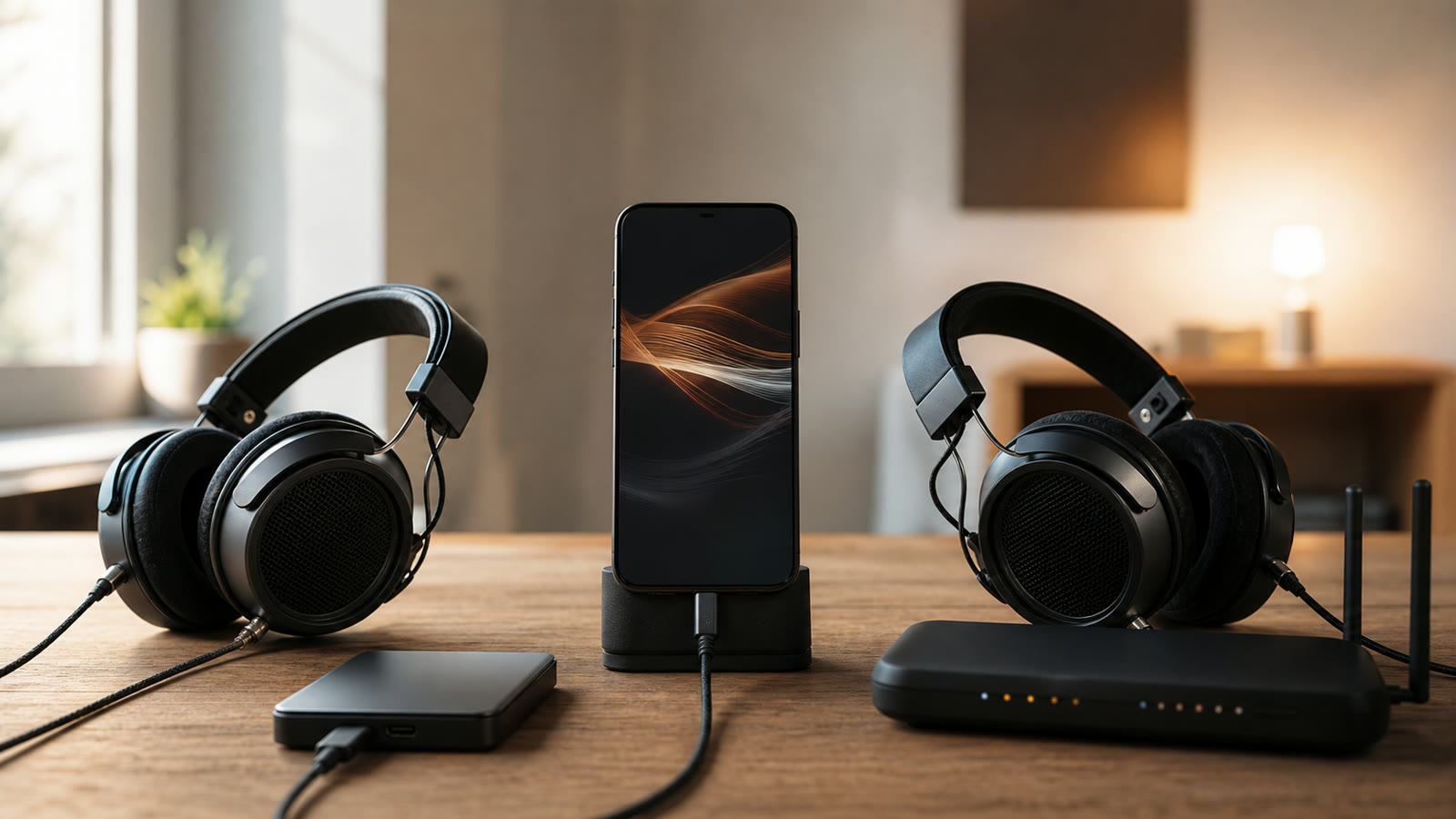
Spotify notes connection type affects lossless playback. Most Bluetooth headphone paths re-encode audio, so neither local FLAC nor lossless stream remains bit-for-bit lossless through typical Bluetooth connection. Wired output or compatible network playback better preserves source.
Do not buy external DAC solely because file says FLAC. Standard CD-quality lossless works well on normal wired paths. High sample rates above iPhone's direct 48 kHz path may need external DAC, but headphone quality, fit, background noise, and master still dominate.
Ownership and Offline Access
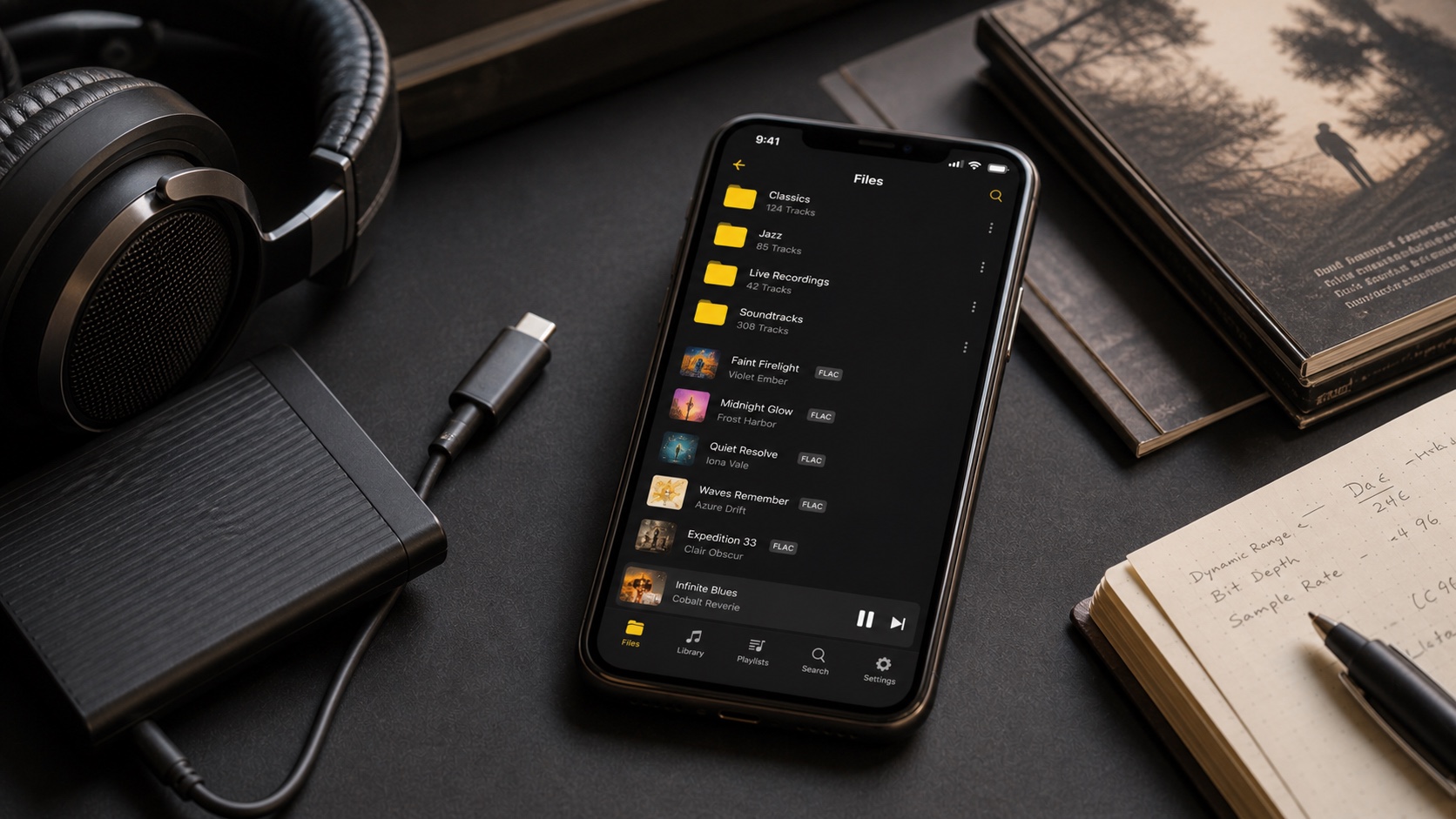
Spotify offline downloads remain app-managed subscription access. Owned FLAC is a normal file: copy it, tag it, back it up, transcode it, choose exact player, and keep it if catalog changes. Spotify wins instant catalog access and discovery. Local files win permanence and control.
Storage differs too. Streaming can avoid keeping whole catalog locally, though Lossless downloads consume more space. Owned library needs deliberate backup-ideally at least two copies on different devices.
Which Should You Choose?
- Choose Spotify Lossless for huge catalog, discovery, social playlists, and low-friction access.
- Choose owned FLAC for exact editions, rare music, durable offline access, metadata control, and backups.
- Use both when streaming is discovery layer and owned files are permanent favorites.
Best answer is not format tribalism. Test same master, matched volume, and same output. Then choose workflow whose tradeoffs you can live with when internet, subscription, or catalog changes.